
BLOGS

Turning AI Into Outcomes: A New Standard for Rethinking SOC Performance and AI Productivity By: Dipesh Kaura, Country Director - India & SAARC, Securonix

TECH NEWS

Turning AI Into Outcomes: A New Standard for Rethinking SOC Performance and AI Productivity By: Dipesh Kaura, Country Director - India & SAARC, Securonix

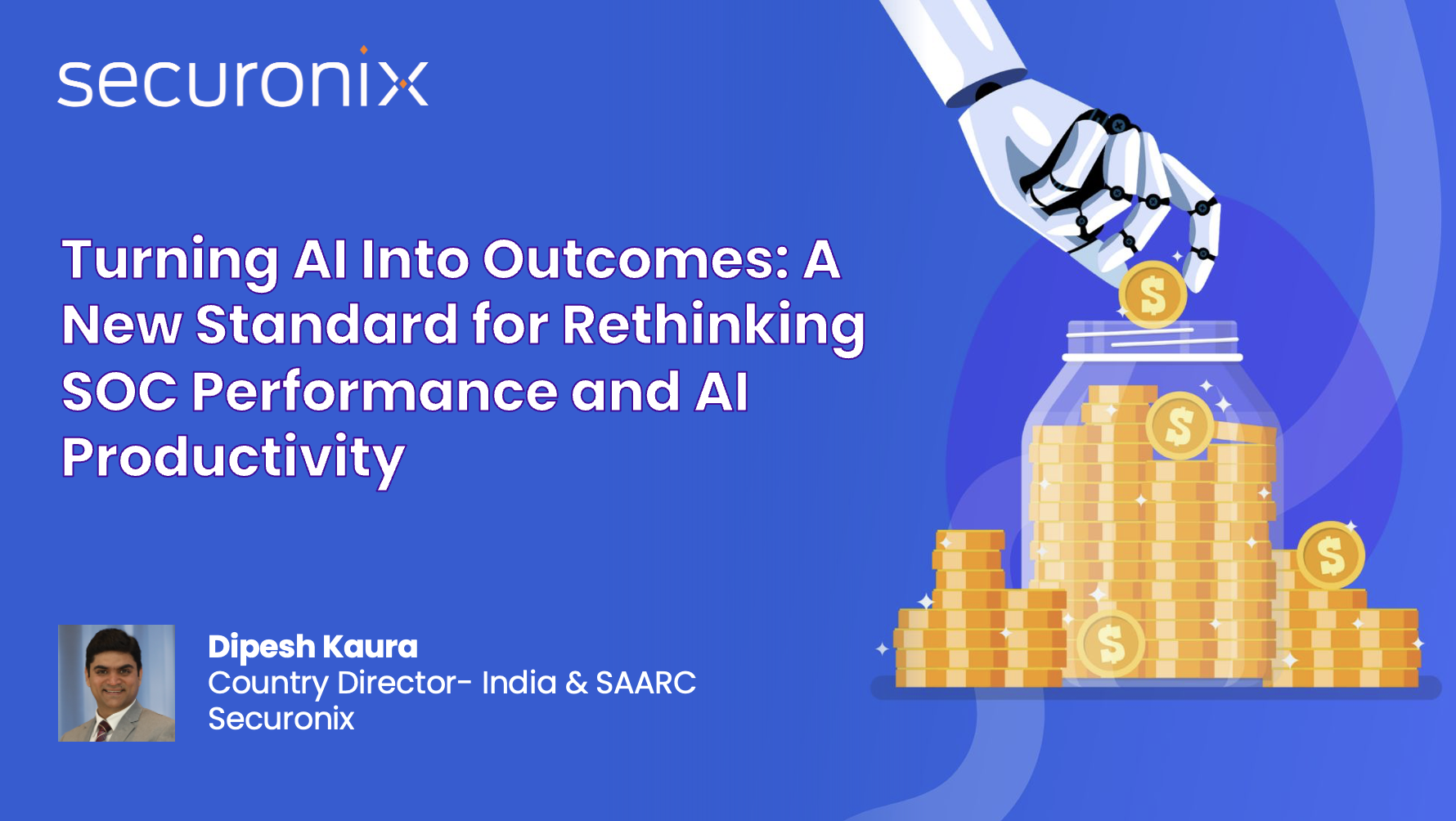
Security Operations Centers have long been measured by activity. How many alerts were processed, how quickly incidents were closed, how much data was ingested. For years, these metrics served as proxies for effectiveness in environments where visibility was limited and response times were the primary concern. That model is under strain.Across modern enterprises, the scale and complexity of cybersecurity operations have shifted. Telemetry flows from cloud platforms, SaaS applications, identity systems, and endpoints, creating a level of visibility that was once unimaginable. At the same time, adversaries are moving faster, operating across environments, and exploiting gaps between tools.In parallel, expectations from leadership have changed. Boards are no longer satisfied with activity metrics. They want to understand whether security investments are reducing risk, improving resilience, and delivering measurable outcomes. This shift is forcing a more fundamental question.What does effective SOC performance actually look like?When More Effort Does Not Mean Better OutcomesMany SOCs today are operating at full capacity, yet still struggling to demonstrate clear impact. Analysts spend significant portions of their time triaging alerts, assembling fragmented context, and preparing investigations before meaningful response actions can begin. The work is constant, but much of it is repetitive and operationally heavy.Adding more tools rarely solves the problem. It often increases noise and further fragments workflows. Expanding data ingestion can improve visibility, but it also drives up cost without guaranteeing better decisions. Hiring more analysts provides temporary relief, but it does not scale effectively against the pace of modern threats.Underneath this is an economic model that has not kept up. Traditional SIEM approaches are built around data volume, where all telemetry is treated equally regardless of its relevance or analytical value. As environments grow, costs rise steadily while outcomes improve incrementally at best.We end up with a system where effort continues to increase but returns become harder to justify.Why AI Has Not Closed the GapAI has been widely positioned as the solution to SOC complexity, yet many implementations have struggled to move beyond isolated use cases. While models may perform well in controlled scenarios, their impact in production environments is often less clear. A key reason is not the capability of the models themselves, but how they are integrated into the operating model of the SOC.When AI-driven decisions cannot be clearly explained, audited, or linked to measurable improvements in analyst productivity, trust becomes difficult to establish. Security teams hesitate to rely on outputs they cannot fully validate. Leaders struggle to quantify value. Boards question both the cost and the risk.In many cases, AI becomes an additional layer rather than a transformative force. It accelerates certain tasks, but it does not fundamentally change how work is done or how success is measured.A different approach is beginning to emerge.Shifting the Focus From Activity to ProductivityForward-looking organizations are starting to redefine SOC performance around productivity rather than throughput. Instead of asking how much work is being done, they are focusing on how effectively that work contributes to meaningful security outcomes.In a productivity-driven model, AI is not measured by features or theoretical capability. It is measured by the work it completes alongside analysts. How much investigation effort it removes. How much time it saves. How consistently it improves the quality of decisions.With a productivity-driven model, we create a more direct connection between technology investment and operational impact.It also introduces a more disciplined approach to data. Rather than treating all telemetry equally, organizations begin to align data usage with analytical value. The focus moves from ingesting more data to using the right data in the right context to drive better outcomes.The Role of Agentic AI in Scaling ProductivityAgentic AI builds on this foundation by introducing a more structured and accountable way to scale intelligence within the SOC.Instead of functioning as isolated assistants, AI agents operate as part of a coordinated system, capable of handling investigations, enriching context, and supporting decision-making within defined boundaries. These systems are designed to work with analysts, not around them, taking on operational workload while keeping humans in control of critical decisions.Analysts spend less time stitching together information across tools and more time evaluating well-formed cases. Investigations move faster, with clearer narratives and stronger context. Decision-making becomes more consistent, reducing variability across teams and shifts.Importantly, this approach also addresses one of the most persistent barriers to AI adoption: governance.Making AI Accountable to the BusinessFor AI to operate effectively in security, it must be accountable in the same way human decisions are. This means actions must be explainable, auditable, and aligned with organizational policies and risk tolerance.In a productivity-driven, agentic model, governance is not layered on after deployment. It is embedded into how the system operates. AI-assisted actions follow defined rules, escalation paths are enforced, and decision-making can be reviewed and validated when needed.Security leaders gain the ability to demonstrate not only that AI is being used, but that it is being used responsibly and effectively. Boards gain clearer visibility into how investments translate into outcomes. AI shifts from being a perceived risk to a governed capability.A New Standard for Measuring What MattersAs cybersecurity continues to evolve, the metrics that define success must evolve with it. Activity and volume will always have a place, but they are no longer sufficient on their own.What matters now is how effectively the SOC converts effort into outcomes. How well it scales analyst capacity. How consistently it reduces risk. And how clearly it can demonstrate value to the business.A productivity-driven approach, supported by agentic AI, provides a path toward that future. It aligns technology, operations, and economics around a common goal: delivering measurable, accountable security outcomes at scale.For SOC teams, this means less noise and more focus. For security leaders, it means clearer justification for investment decisions. For boards, it provides the visibility and confidence they have been asking for.In a landscape defined by complexity and constant change, the organizations that succeed will not be the ones that simply process more data or deploy more tools. They will be the ones that measure what matters and build their operations around it.

From Center to Perimeter: Securing the Edge and GenAI Frontier By: Rahul S Kurkure, Founder & Director, Cloud.in

TECH NEWS

From Center to Perimeter: Securing the Edge and GenAI Frontier By: Rahul S Kurkure, Founder & Director, Cloud.in

Traditionally, enterprise security was built around castle-and-moat strategies, which assumed everything external was dangerous, and the inside had to be protected from it. Users and devices that were only inside the ‘castle’ or the organization’s physical perimeter, which included firewalls and VPNs, had access to data and applications. However, this model is obsolete in today’s digital era, where digital transformation, cloud adoption, hybrid and remote work cultures, IoT proliferation, and the explosive rise of Gen AI have reinvented, redefined, and expanded the enterprise attack surface. With the perimeter getting diluted, data, applications, and workloads are spread across distributed environments from centralized cloud platforms to remote edge nodes. Furthermore, GenAI is getting embedded into the business processes and becoming the engine of innovation. These technologies, while providing unprecedented scale and intelligence, also introduce a complex web of decentralized risks.The New Frontiers of Risk: Edge & GenAIThe shift toward decentralized processing and autonomous intelligence has created two primary security battlefronts, the Edge Paradox, where processing data closer to the source, such as IoT devices and local sensors, enables a reduction in latency but multiplies the attack surface. The number of endpoints is increasing for threat actors to attack, as every edge node is a potential entry point for physical tampering or unauthorized network access. Secondly, it is the GenAI Integrity Gap where GenAI introduces “Prompt Injection” data leakage through training sets and “Model Inversion” attacks. Unlike static data, AI models are dynamic, with a possibility that their outputs could be manipulated to leak sensitive intellectual property, bypassing traditional filters. Furthermore, organizations that rely on third-party models are vulnerable to supply chain risks and associated vulnerabilities. There is also the possibility of employees using public AI tools in the absence of organizational oversight, exposing proprietary data.A Converged Security FrameworkTo protect the modern enterprise, organizations must evolve their cloud pillars to encompass both the physical edge and the cognitive layer of GenAI.Decentralized Identity and Access Management (IAM)In this methodology, individuals are allowed to securely control their digital identity without relying on a central authority. In an edge environment, IAM must move beyond simple user logins to Machine Identity Management. Every edge device and every AI agent requires a unique, verifiable identity. For GenAI, implementing "Model-level role-based access control (RBAC)" ensures that only authorized users can query specific LLMs (Large Language Models) or access the sensitive datasets used to fine-tune them.Data Protection: Encryption and "Data Poisoning" DefenseProtecting data requires encrypting it not only at rest and in transit, but also during its use. Secure Enclaves (Trusted Execution Environments) are to be used to process sensitive data on edge hardware. Data Protection GenAI involves safeguarding against data poisoning, where malicious actors feed corrupted data into training pipelines to introduce bias or break the model. It can also eliminate false positives and bad decision-making.Network Security: Micro-segmentation and Zero TrustTraditional firewalls cannot protect thousands of distributed edge nodes. By adopting a zero-trust architecture, continuous authentication is made possible, as nothing can be trusted implicitly. With this model, every interaction across networks, devices, and AI systems is validated and verified. Since GenAI apps rely heavily on APIs to communicate between the model and the user, securing these “connectors” is the new front line against data exfiltration.AI-Driven Detection ControlsWith the exponential increase in data devices and threats, traditional detection methods, especially standard monitoring, cannot keep up with these GenAI-powered threats, especially at the scale and sophistication they come. AI-driven detection can be leveraged here. Self-defending AI models can monitor other AI models for “hallucinations” or suspicious prompt patterns that indicate a breach attempt. Deploying lightweight detection agents on edge devices to identify anomalies in local traffic before they propagate to the central cloud should become mandatory. This edge observability can keep the GenAI-enabled threats at bay.Governance, Compliance, and AI EthicsEthical guidelines should be defined and deployed alongwith data handling standards, model risk assessments, and regulatory frameworks. Adhering to HIPAA or PCI DSS is not compounded by emerging AI Acts such as the EU AI Act. Governance must now include “Model Accountability,” which is the ability to explain why an AI made a certain decision, in other words, ensure algorithmic transparency. At the edge, data often resides in different jurisdictions. Automated tools must ensure that data processed at a local edge node stays compliant with regional privacy laws, establishing Data Sovereignty.Incident Response for the Modern EraA breach at the edge or a compromised AI model requires a specialized playbook. If a GenAI model is ‘jailbroken” or compromised, response teams must be able to isolate the model instantly without shutting down the entire business flow. At the edge, manual intervention is impossible and has to be replaced by automated remediation. Security frameworks must include automated “kill switches” to disconnect compromised nodes immediately.In an era where data is processed at the speed of thought by AI and at the speed of light at the Edge, security cannot be an afterthought. By integrating these emerging technologies into a unified framework, organizations ensure that their leap into the future of GenAI and Edge computing is both bold and bulletproof.__________________________________________________________________________________
How AI/ML-Driven Observability Is Redefining Network Operations in India By: Gaurav Mohan, VP Sales – APAC, India & Middle East, NETSCOUT

TECH NEWS

How AI/ML-Driven Observability Is Redefining Network Operations in India By: Gaurav Mohan, VP Sales – APAC, India & Middle East, NETSCOUT

India’s digital infrastructure has undergone a significant transformation over the last decade, positioning the country among the leading economies in digital adoption. There are several reasons for the rapid growth of the Indian digital transformation market, including accelerated cloud migration, 5G adoption, more enterprise AI adoption, and the Indian government’s Digital India program, among other factors. With organizations relying on the complex webs of cloud, edge, and on-premise environments to support critical functions, establishing continuous visibility across networks and applications takes top priority. Network monitoring solutions act as basic enablers of this visibility, ensuring reliability, performance, and security for modern enterprises. Unfortunately, traditional monitoring tools, which are inherently reactive, fall short in this rapidly changing space because they do little to predict or prevent problem escalation and typically send alerts only after an incident has occurred, impacting both customers and employees.The Bad News: Shortcomings of legacy monitoringAs the digital ecosystems become more active and distributed, the reactive approach of legacy tools and systems can be problematic. Many of these tools are not designed to handle massive volumes of data generated from digital ecosystems in today’s Indian operations. Data silos in legacy systems hinder data-driven decision-making, which is otherwise crucial for efficient national-scale operations. Traditional Metrics, Events, Logs, and Telemetry (MELT) data can only reveal the existence of a problem, but not the ‘why’ of it. Traditional monitoring solutions do not provide IT and NetOps teams with both completeness and cost-efficiency. Ongoing maintenance costs take a bigger bite out of the budget, and cybercriminals love to target legacy systems because they often lack the protection, care, and feeding needed to truly protect the systems and information.The Good News: AI is helping detect anomalies before outages occurAI/ML-driven observability platforms can empower Indian enterprises and service providers to shift from reactive firefighting to proactive and predictive operations, preventing problem escalations or even outages before they cause severe damage. By integrating Deep Packet Inspection (DPI) with MELT, organizations achieve comprehensive situational awareness, harnessing the most effective telemetry while maintaining uncompromised system performance. AI/ML-driven observability solutions can also support automated responses, where the platform can initiate corrective actions once an anomaly is confirmed. The result is enhanced observability while monitoring to minimize downtime and ensure continuous service delivery.Staying ahead with AI in network operationsAI/ML-driven observability is indeed playing a critical role in automating and optimizing network operations. By analyzing huge volumes of historical data, AI algorithms enable the identification of patterns, trends, potential issues, and subtle anomalies before they impact services. This shift from reactive to predictive is transformative for Indian enterprises handling millions of users operating at the same time. When network issues occur, traditional manual processes consume a lot of time to troubleshoot. AI and automation can help reduce mean time to detect (MTTD) and mean time to resolution (MTTR) by accelerating the mean time to knowledge (MTTK). In India’s highly regulated financial services and telecom industries, where downtime directly impacts revenue, compliance, and customer trust, AI-powered systems enable real-time anomaly detection and rapid, intelligent remediation.AI/ML-Driven Observability can play a bigger role in critical industriesFinancial institutions: AI/ML-driven observability platforms can deliver real-time network insights that enable organizations to rapidly troubleshoot issues, remain agile, and stay ahead of the curve. This is critical for the country’s high-volume payment systems such as UPI, NEFT, and others. Fraudulent transactions can be discovered faster, and risks can be contained while ensuring secure customer experiences. End-to-end visibility across data centers, cloud workloads, payment gateways, and customer-facing apps is enhanced by AI-driven observability models. Abnormal traffic patterns are detected by correlating network performance with transactional behavior that may signal cyber threats or fraudulent activities.Telecom: Indian telecom providers support millions of users leveraging both 4G and 5G networks. AI/ML-driven observability can help the providers support millions of users, leveraging both 4G and 5G networks, offering seamless connectivity to customers by estimating, preventing, and quickly addressing network outages. AI/ML-powered observability platforms can unify telemetry data and correlate it to the context, offering an end-to-end view of the entire network, predicting possible disruptions, and providing actionable corrections to improve outcomes. The models trigger alerts early on about anomalies and ensure service quality is not impacted.Large enterprises: Application complexity is increasing across India, as enterprises increasingly adopt hybrid and multi-cloud strategies and users expect near-instant app experiences. This is driving the demand for advanced monitoring and observability capabilities, with AI playing a pivotal role in enhancing performance, reliability, and user experience. AI/ML-driven observability can unify visibility across on-premises infrastructure, cloud, and edge locations to detect any degradations of network performance and optimize the use of cloud resources. By leveraging real-time comprehensive visibility, teams can enhance the efficiency of operations while aligning network performance with business outcomes.The Last WordAI/ML-driven Observability platforms can offer unmatched scalability and visibility into all parts of the network. Tool clutter and costs are significantly reduced while gaining comprehensive views and analysis. With enhanced decision-making capabilities of AI/ML-driven observability platforms leveraging AI-ready curated data, teams can drive better business outcomes more efficiently and effectively, and maintain exceptional user experiences by keeping critical networks and services always available and delivering value. In India, where the country’s economic progress is interlinked with its digital infrastructure, the rapid evolution of networks and maturation of AI have made AI/ML-driven observability a strategic necessity and a business imperative.

Modern SOC Operating System for the Indian Financial Services Sector: Why Speed, Scale, and Resilience are Non-Negotiable By: Dipesh Kaura, Country Director- India & SAARC, Securonix

TECH NEWS

Modern SOC Operating System for the Indian Financial Services Sector: Why Speed, Scale, and Resilience are Non-Negotiable By: Dipesh Kaura, Country Director- India & SAARC, Securonix

India’s financial services sector continues to see rapid growth, driven by new market entrants and accelerated digital transformation across established institutions. India now accounts for nearly half of global real-time digital payment volumes, with a 48.5 percent share, underscoring both the scale and criticality of this ecosystem. Digital payment transactions are projected to grow from 206 billion in FY25 to 617 billion by FY30, with total transaction value increasing from INR 299 trillion to INR 907 trillion. Alongside this growth, financial institutions including banks, NBFCs, and insurers play a central role in safeguarding sensitive customer data while maintaining economic stability. The widespread adoption of UPI has reshaped payment experiences but has also expanded the threat landscape. Increased digital activity has led to greater exposure to fraud, ransomware, insider threats, and nation-state attacks. As the attack surface grows in scale and complexity, traditional Security Operations Centers are under increasing pressure. Many struggle to keep pace with the volume, speed, and sophistication of modern threats, highlighting the need for more adaptive, analytics-driven security operations across the financial services sector.A regulatory landscape that leaves no room for complacencyAs cyber risk increases alongside the financial sector’s rapid digital transformation, India’s regulatory environment has become more stringent and enforceable. New and evolving mandates are reshaping how financial institutions manage data, protect sensitive personal information, and report incidents. Regulations such as the RBI’s guidelines on information security, electronic banking, technology risk management and cyber frauds, CERT-In reporting requirements, and the DPDP Act have elevated cybersecurity to a board-level priority. In this environment, SOCs are no longer evaluated by the volume of alerts they process, but by their ability to deliver outcomes. Boards and regulators now expect autonomous detection and response capabilities, measurable risk reduction, faster breach containment, and demonstrable return on security investments. Basic reporting is no longer sufficient. Leadership teams require clear evidence of control effectiveness, incident readiness, and visibility into third-party risk exposure.Meeting these expectations requires more than incremental improvements to existing SOC tools. Financial institutions need a modern SOC operating system built on open, cloud-native architectures, where SIEM, UEBA, SOAR, and threat intelligence are unified into a single TDIR pipeline. This approach reduces tool sprawl, streamlines operations, and accelerates time to resolution. An intelligence-driven SOC operating system, designed for speed, resilience, and scale, gives organizations the flexibility required to adapt to evolving threats and regulatory demands.Traditional SOCs are failingTraditional SOCs were built for on-premises environments, perimeter-based security models, and relatively predictable workloads. The tools that support these SOCs often operate in silos, leading to slow detection, lengthy investigations, and an increased risk of missed threats due to fragmented context. Today’s financial services environments look very different. They are highly dynamic, process millions of transactions per second, and operate across hybrid, multi-cloud, and SaaS platforms. Legacy SOCs were not designed to operate at this speed or scale. They rely on outdated SIEM technologies and manual processes that place a heavy burden on analysts, contributing to alert fatigue and inconsistent response.As a result, security teams lack complete visibility across their environments and struggle to adapt to the pace and complexity of modern financial operations. These limitations make traditional SOC models increasingly ineffective for the current and future needs of the financial services industry.The solution lies in the modern SOC operating systemThe modern SOC operating system represents a fundamental shift in how security operations are designed and delivered. Unlike legacy SOCs, this operating model must be AI-powered, cloud-native, and outcome-driven to meet the scale, speed, and regulatory expectations of India’s financial services sector. A modern SIEM at the core of the SOC must deliver precision, speed, and clarity as threats grow more complex and board-level scrutiny increases.Speed: Matching the speed of financial transactionsIn today’s financial environment, speed is not optional. Every millisecond matters. Modern SOCs are built to reduce mean time to respond by embedding intelligence, automation, and guided decision-making across detection, investigation, and response. Faster response limits dwell time, reduces operational disruption, and lowers the cost of investigations. It also improves analyst effectiveness and delivers metrics that resonate at the board level. Speed becomes a strategic advantage, not just an operational improvement.Scale: Securing a rapidly expanding ecosystemIndia’s financial services ecosystem is expanding across regions, platforms, and digital channels, dissolving the traditional perimeter. Modern SOC platforms are designed to scale with this growth. Cloud-native architectures combined with advanced analytics, behavioral detection, and agentic AI allow security operations to grow without linear increases in complexity or cost. Support for hybrid, multi-cloud, and multi-tenant environments ensures security can keep pace with innovation rather than slow it down.Resilience: From incident response to business continuityThe BFSI sector continues to face persistent threats such as phishing, ransomware, credential theft, and data breaches. A compliance-only, checklist-driven approach creates a false sense of security. A modern SOC operating system embeds resilience into day-to-day operations through continuous monitoring, proactive threat hunting, and integration with business continuity and disaster recovery processes. This approach always keeps institutions audit-ready and enables leadership to demonstrate cyber resilience with confidence, not just compliance.The future SOC in India’s financial services sector will not operate as a cost center, but as a strategic nerve center. Investing in a modern SOC operating system is a strategic decision for BFSI organizations, not a tactical technology upgrade. Security operations are no longer defined by the number of tools deployed. They are measured by outcomes. The shift is from fragmented, reactive models to unified, proactive defense that delivers resilience, speed, and measurable business value.

Empowering Enterprises: How Managed Services Accelerate Agility and Innovation By: Rahul S. Kurkure, Founder & Director, Cloud.in

TECH NEWS

Empowering Enterprises: How Managed Services Accelerate Agility and Innovation By: Rahul S. Kurkure, Founder & Director, Cloud.in

Businesses are no longer viewing outsourcing as a cost-saving solution for non-mission-critical functions, such as basic IT infrastructure management, which was once a key feature of traditional outsourcing models in the 1990s. Partnering with a managed services provider (MSP) traditionally meant handing over a portion of all management, monitoring, and maintenance of business functions and processes related to IT, including cybersecurity, to a third-party provider under a clearly defined service level agreement (SLA). Managed services have evolved today into a comprehensive, outcome-driven model to support enterprises that are interconnected in a digital world.In the current business ecosystem, organizations relying on managed services experience several advantages and address the challenges of legacy systems, siloed operations, and talent scarcity, which are otherwise roadblocks to becoming digitally agile. This is a crucial value addition by an MSP, a long-time partner in digital transformation services. The global managed services market, which was estimated at USD 401.15 billion in 2025, is expected to reach USD 847.41 billion by 2033, growing at a CAGR of 9.9% from 2026 to 2033. Enterprises realize that effectively managing performance, delivery, compliance, and resiliency of the increasingly complex IT infrastructure and networks is critical and does not end with just migrating to the cloud. Managed services are expected to create strategic value by rising to an outcome-based model.Enterprise agility is a business imperativeWith volatile markets, evolving customer demands, stringent regulations, and the advent of advanced technologies, organizations are required to respond to these unprecedented changes rapidly. However, when enterprises continue to function with legacy systems and siloed operations, it impacts decision-making. Internal IT teams are compelled to focus on reactive maintenance and routine tasks rather than on proactive development. MSPs address these challenges by simplifying complex IT processes so internal teams can reset their priorities and adapt quickly to the market demands effortlessly.Streamlining operationsBy engaging an MSP, organizations can save significant time and resources. Routine tasks, such as software updates or patch management, get automated along with scheduled maintenance, preventing unexpected downtime or failure. Continuous monitoring of the network safeguards valuable digital assets and data from cyber threats. Streamlining of operations provided by managed services offers a proactive approach to IT management rather than reacting to issues and impacting the business.Enhanced user experienceFor a digital transformation initiative to succeed, user experience is crucial. Managed services enable proactive, continuous monitoring and troubleshooting with the usage of performance management tools to detect and resolve issues in real time, ensuring seamless operations. The 24/7 expert assistance and proactive infrastructure management improve system reliability, minimize downtime, and maintain peak performance and a better user experience.ScalabilityEnterprises grow, and with this growth comes complexity. As businesses expand their operations across geographies and integrate acquisitions, MSPs offer a scalable operating model that grows with the business. Enterprises can adjust resources up or down depending on the requirement without any delay or incurring overhead costs, and not disrupting existing operations. Automated monitoring services offered by managed services can anticipate system requirements and manage the spikes in demand without impacting performance.Strategic enabler of business innovationInnovating at a rapid pace is one of the key benefits for businesses that partner with managed services. As organizations face relentless pressure to innovate and stay competitive in the digital era, partnering with managed services has emerged as a powerful enabler of sustained advantage. Secondly, by taking on the management of the IT infrastructure and network function, managed services enable businesses to focus on innovation and strategic growth.Access to advanced technologiesMSPs are more agile in adopting cutting-edge, advanced tools, technologies, and solutions that offer access to businesses. Enterprises can integrate these next-gen technologies and bring about innovation to their products, processes, and services, and stay ahead of the curve. Managed services enable enterprises to extract actionable insights from complex data that support innovation. Service providers also offer the operational infrastructure that is required to scale innovation with speed.Faster time to marketWith speed being critical to succeed in today’s extremely competitive environment, reducing time to market is key. With managed services taking over the responsibility of updating systems and software, running cybersecurity tests, and maintaining peak performance of the IT infrastructure, in-house IT teams can focus on launching new products and services or entering new markets. All this can be achieved without getting caught in the delays caused by technical glitches in the environment. An effective go-to-market strategy of a business can be achieved by leveraging an MSP to attract new customers across geographies and expand further while generating continuous success.Establishing cybersecurity readinessCybersecurity is today a business imperative, and as the security teams are overwhelmed with the continuous monitoring of IT infrastructure and networks, real threats can get missed. By partnering with a managed security services provider, businesses can get the benefits of 24/7 monitoring and rapid response, and compliance management, reducing the attack surface and eliminating barriers to innovation. Managed service providers are adding the security component to their offerings today as they update their security strategies on an ongoing basis. This enables organizations to safeguard their digital assets while focusing on innovation.In India, the IT managed services industry is increasingly adopting emerging technologies and automation, and evolving rapidly, experiencing robust growth, driven by the rise in digital transformation initiatives, cybersecurity threats, and regulatory compliance requirements. According the IMARC Research the India’s managed services market size, which was valued at INR 47,673.03 crore in 2025, is projected to reach INR 98,130.76 crore by 2034, growing at a CAGR of 8.35% from 2026-2034. Furthermore, this MSP market is highly competitive, featuring major domestic IT giants, global corporations, and niche and regional providers, accelerating agility and encouraging continuous innovation.

Harnessing Curated Threat Intelligence to Strengthen Cybersecurity By: Gaurav Mohan, VP Sales – APAC, India & Middle East, NETSCOUT

TECH NEWS

Harnessing Curated Threat Intelligence to Strengthen Cybersecurity By: Gaurav Mohan, VP Sales – APAC, India & Middle East, NETSCOUT

There is no shortage of debate and disagreement about many facets of cybercrime. However, what is universally accepted is that the cyberthreat landscape is constantly and rapidly evolving, and cybercriminals are very sophisticated, leveraging advanced AI capabilities to launch attacks more efficiently and effectively every day. This makes proactive threat intelligence critical for organizations to stay informed about emerging threats and tactics, be proactive in combating attacks and ensure they can prevent cyber-attacks from damaging their business.Understanding curated threat intelligenceThe process of selecting and validating raw threat data gathered from various sources and organizing it into a structured and actionable format is known as curated threat intelligence. It enhances an organization’s cybersecurity posture by providing insights into threat actors’ activities and tactics, techniques, and procedures (TTPs).Improving one’s cybersecurity posture with up-to-date threat intelligence is a foundational element of any modern security stack. This enables automated blocking of known threats and reduces the workload on security teams while keeping the network protected. Curated threat intelligence also plays a broader role across cybersecurity strategies, like blocking malicious IP addresses from accessing the network to support intrusion prevention and defend against distributed denial-of-service (DDoS) attacks.Curated threat intelligence has several key features that make it very valuable to organizations:Higher quality and accuracy: With in-depth vetting and verification of the data, curated threat intelligence has fewer false positives, making it more dependable.Targeted relevance: This type of data is focused on key threat behaviors to ensure it is specific to an organization's needs with reduced noise.Improved context and enrichment: Curated threat intelligence goes beyond basic indicators to offer valuable context to improve understanding of threats, motives, and more.Actionable: It is ready to be fed into cybersecurity solutions, including security information and event management systems (SIEMs), firewalls, intrusion detection systems (IDS), and more.Ongoing improvement: The data is dynamic and evolving, adapting to new threats and constantly being updated with the latest threat intelligence.Curated Threat Intelligence can be strategic, operational, tactical, or technical, depending on its focus and content. Bringing together different types of curated threat intelligence has several benefits, like strategic threat intelligence's broad view is great for CIOs and CISOs to help guide the holistic security strategy for the organization, while tactical threat intelligence is more valuable to practitioners who are in the details of the data on a day-to-day basis.The Threat Intelligence LifecycleThe threat intelligence lifecycle typically includes several steps to improve an organization's security posture that follows and structured and iterative closed-loop process:1. Planning and direction: Defining the scope, priorities, and objectives, which include identifying key stakeholders, determining critical assets and data, outlining intelligence gaps, and evaluating existing threat intelligence sources for improvement.2. Data collection: Gathering data from internal sources such as logs, incident reports, and external sources like the honeypots, TI feeds, industry forums, among others, to build a curated threat intelligence database.3. Data processing: Organizing, standardizing, and enriching the collected data to make it suitable for analysis.4. Analysis: Analyzing processed information to understand threats and develop actionable insights regarding profiles, behaviors, potential impacts, and intelligence gaps.5. Dissemination: Sharing analyzed and tailored intelligence with different stakeholders to determine corrective actions to be taken.6. Feedback: Process review and improvements based on learnings and feedback.AI- and ML-driven automation across the threat intelligence lifecycle helps organizations accelerate the time-to-value. By minimizing the human interaction with raw data, the right people spend more time analyzing and making sense of the valuable insights that flow from the data.Value of Curated Threat DataOrganizations overwhelmed by massive amounts of cybersecurity data can gain clarity and control with curated threat intelligence. By validating, enriching and verifying the data, curated intelligence dramatically reduces false positives and noise, enabling security teams to focus on the most relevant and credible threats. Improved accuracy and certainty accelerates time-to-knowledge, sharpens prioritization based on threat severity and potential impact, and ensures resources are applied and deployed where they matter most. With higher confidence and certainty, teams can respond to incidents faster and more decisively, while also shifting from reactive to proactive and ultimately preventative – using known adversary indicators and patterns to investigate threats, strengthen controls, and stop attacks before they cause damage.Curated threat Intelligence transforms one’s cybersecurity from reactive to resilient. Delivering context-rich indicators, adversary motives, and proven TTPs, enables faster detection, sharper prioritization, and more decisive response across the security stack. From blocking DDoS attacks to accelerating threat investigation, vulnerability management and incident triage, curated threat intelligence empowers teams to stay ahead of sophisticated threats – strengthening defenses, improving operational resilience, and protecting the user experience.

Beyond Traditional SIEM: The Emergence of Intelligence Detection and Response Platforms By: Dipesh Kaura, Country Director- India & SAARC, Securonix

TECH NEWS

Beyond Traditional SIEM: The Emergence of Intelligence Detection and Response Platforms By: Dipesh Kaura, Country Director- India & SAARC, Securonix

For years, SIEM has been a core part of enterprise security strategies. When it first emerged in the late 1990s, SIEM focused mainly on collecting and storing logs for troubleshooting and compliance. Its role was largely reactive, centered on visibility rather than action. As cloud computing took hold, SIEM platforms evolved. Advanced analytics, machine learning, and user and entity behavior analytics were added, along with SOAR and threat intelligence capabilities. These enhancements improved detection and incident response. But as threats became more sophisticated and AI-driven, regulations more demanding, attack surfaces broader, and security teams more constrained, traditional SIEM platforms began to fall behind.Challenges with traditional SIEMsSIEM was originally built for a world dominated by on-premises infrastructure, predictable traffic, and static, rule-based detection. While these traditional platforms still play a role in log retention and compliance, they struggle to meet the demands of modern IT and cloud environments.As infrastructure becomes more dynamic, security teams lose visibility, making it harder to detect and investigate threats. Analysts are flooded with thousands of alerts, many of them false, leading to alert fatigue and slower response. To keep up with growing threats and regulatory pressure, organizations often add more security tools to address specific gaps. Over time, this creates tool sprawl, with each solution generating its own alerts and further increasing noise.Analysts are left trying to separate real incidents from false positives across disconnected tools, driving up mean time to detect. Combined with ongoing skills shortages and limited resources, these delays make effective threat investigation increasingly difficult. In today’s threat landscape, security teams simply cannot afford that level of friction or risk.Modern SIEM – Shift from Events to IntelligenceIn today’s cybersecurity landscape, attackers are using AI to move faster and operate at greater scale than ever before. For SOC teams, keeping up with these threats in real time has become increasingly difficult.AI-powered SIEMs address this challenge by shifting from passive monitoring to active defense. With intelligence-driven detection and response, they continuously analyze behavior, learn from new patterns, and respond to threats as they emerge, helping security teams stay ahead rather than react after the fact.AI-powered SIEM delivers:· Enhanced and intelligent detectionToday’s SOC teams find it very challenging to detect threats in real time. This can be easily addressed by an AI-powered SIEM, as it enables rapid and more precise anomaly detection, predictive analytics, and threat chaining, combining behavior analytics with datasets like cloud logs, on-prem attack surfaces, and external intelligence. This approach, which does not rely on pre-defined rules, enables the detection of potential threats and anomalies, such as compromised credentials, privilege abuse, or data exfiltration, before they escalate further.· AI-Assisted threat hunting and investigationAll SOCs are facing the brunt of the shortage of skilled analysts and the complexities that are involved in threat investigations. AI can provide a solution by converting raw alerts into actionable insights, generating detailed compliance reports, and also providing recommendations for the next plan of action, saving the valuable time of analysts by aiding in threat hunting and investigation. For instance, AI can write queries and summarize findings. By gaining a unified view of incidents across the entire attack surface, investigations can take place in record time, enhancing decision-making accuracy.· Automated Threat Response with Agentic AITrust in automated responses is a challenge for many organizations. It can be solved by leveraging Agentic AI systems, as they can autonomously detect, analyze, and triage security alerts. These systems understand service dependencies and generate Infrastructure as Code (IaC) for DevOps approval, minimizing errors and boosting adoption. Modern SIEMs help in automated actions such as isolating endpoints and disabling compromised identities, while significantly reducing mean time to respond (MTTR).· Scalable, Resilient ArchitecturesModern SIEM platforms leverage microservices architectures, offering independent scalability for various components. The performance, fault isolation, and resilience improve further, and enable cost-effective scaling to manage the exponentially growing cybersecurity demands.Redefining the Role of SOCThe evolution of SIEM is already transforming SOCs, making teams focus on real threats and risk mitigation. Agentic-AI-powered SIEM provides the SOC manager complete visibility, control, and speed, reducing MTTD and MTTR. Analysts’ productivity gets improved with contextual insights. Alert noise gets minimized through intelligence-led prioritization, while enhancing the efficiency of analysts significantly. Teams are empowered with a reduction in alert fatigue, and efficiency is orchestrated across tools, people, and processes.Modern SIEM platforms help security teams operate in a smarter and more proactive way by combining advanced analytics with automation. AI now sits at the center of effective security operations, enabling faster detection and more adaptive responses as threats evolve.As attack methods continue to change, AI-powered SIEM has become essential for the modern SOC, helping teams move from reactive monitoring to confident, efficient defense.

Smart Manufacturing Under Threat: OT Security in the Industry 4.0 Age By: Pritam Shah, Global Practice Head - OT Security and Data Security, Inspira Enterprise

TECH NEWS

Smart Manufacturing Under Threat: OT Security in the Industry 4.0 Age By: Pritam Shah, Global Practice Head - OT Security and Data Security, Inspira Enterprise

Today’s fourth industrial revolution, or Industry 4.0, which is a fusion of digital and physical systems, is giving rise to a rapidly growing smart manufacturing ecosystem. The manufacturing sector has already begun nurturing ‘smart factories’ and in some cases “Dark Factories” across automotive, consumer goods, energy, and biopharma, among other industries, by embracing automation, AI, industrial internet of things (IIoT), and several digital technological innovations. This convergence of Operational Technology (OT) and Information Technology (IT) has driven smart factories to establish unprecedented levels of automation, predictive maintenance, and rapid production. Although this potential to enhance efficiency, reduce costs and inventory, and deliver product optimization benefits the organization immensely, it comes with a significant rise in cybersecurity risks. Manufacturing is among the top sectors vulnerable to cyberattacks due to the huge amounts of sensitive data it holds, but it is often seen as lagging in terms of cybersecurity.Cybersecurity challenges in modern OT environmentsIndustry 4.0 technologies such as IIoT, cloud computing, AI, and machine learning. edge computing, digital twin, big data and analytics, addictive manufacturing, and autonomous robots have dramatically increased the interconnectivity as well as the attack surface, giving rise to cybersecurity challenges.? Legacy System IntegrationSeveral manufacturers continue to rely on end of life support software, outdated firewalls, and patch management for silo networks. These legacy defenses are not designed for IT and OT networks that depend on the same digital environment. The organizations are unable to detect cybersecurity threats as they were not built with modern security protocols, making them vulnerable to cyberattacks when integrated with new digital systems. This is driving the manufacturing organizations to exfiltrate sensitive information, causing significant damage to their operations, revenues, and reputation. The disruption can cascade through the supply chain, causing delays across. Stealing product designs and manufacturing processes of the manufacturer can create a dent in the organization’s competitive edge.? Complexities with IT-OT ConvergenceThe integration of IT and OT with the Industry 4.0 initiatives gives rise to benefits such as real-time data insights while enhancing their efficiency and effectiveness, leading to better decision-making and operations. However, poor segmentation between the two networks can create pathways for attackers to move laterally from IT systems that are compromised into critical OT assets, increasing the complexity in the manufacturing ecosystem.? Insufficient Logging and MonitoringSeveral factories lack unified visibility across OT networks, where vulnerabilities and anomalies cannot be identified, and these are early signs of compromise. Only complete network visibility can ensure effective OT security. The absence of defense against threats can lead to devastating consequences, negatively impacting production uptime, regulatory compliance, revenues, and worker safety.Against this backdrop, where interoperability between virtual and physical systems is enabled, the expanded attack surface must be addressed and reduced for a successful Industry 4.0 journey.Building a new approach for OT security for Industry 4.0Manufacturing industries require a comprehensive end-to-end approach addressing all aspects of people, technology, and processes to combat growing cyber threats. The OT security best practices include,? Adopting Zero Trust ArchitectureIn the manufacturing setup, which is defined by aging machinery, complex networks, and growing threats that are both internal and external, the best solution for stronger defense is by embracing the zero-trust model. This is based on the principle of “never trust, always verify”, where every connection and access is scrutinized before giving permission. Remote and third-party access is secured by implementing least-privileged access policies and replacing outdated virtual private networks (VPNs). Continuous monitoring and logging of all remote access activities is critical.? Implementing Network SegmentationThis process involves the process of isolating industrial control systems and other critical OT assets from each other and from the IT networks as well. This reduces the attack surface significantly because attackers accessing one part of the network cannot penetrate to other segments, ensuring no lateral movement to other systems, production lines, and controllers, reducing the damage and downtime. By segmenting internal systems from those of supply chain partners, organizations can contain third-party risks and prevent a compromise in a partner’s network from propagating into their own.? Patch Managed Customized to OTOT and industrial control systems (ICS) environments present challenges for securing the systems with patches. This can be due to legacy systems running for a long time without updates, a lack of specialized expertise to handle patch implementation, the presence of visibility gaps, vendor constraints, and downtime restrictions. To succeed in securing the systems, patch management should be done effectively. An effective OT patch management process includes establishing an OT Asset inventory, clearly identifying all vulnerabilities, applying the right patches to the right assets, then reviewing, managing, testing, and validating patches thoroughly.? OT Security Governance and TrainingIt is important to distinguish between IT and OT security while ensuring the safety of the plant. Team leads and their teams responsible for OT security are to be identified and their duties assigned. Clear governance frameworks that align with cybersecurity with safety, and compliance standards must be established. Employees who are authorized to access IT and OT assets should be provided with appropriate security training. OT engineers and plant operations team members have to be trained on proactive defense, incident response, and should know how to implement all best practices effortlessly for digital operations. Stringent identity and access management protocols should be in place at all times. All employees, third-party contractors, and other associates who have access to sensitive information at the manufacturing unit should be vetted regularly, with guests who visit the plant monitored.Manufacturing organizations should establish structured, layered, and proactive risk management strategies to safeguard their assets from cyberattacks as they leverage OT-IT convergence. In doing so, they are not only securing their smart factories but building the much-needed trust and competitive edge in today’s digital manufacturing or Industry 4.0 era.

Cybersecurity Outlook: Major Trends to Watch in 2026 By: Dipesh Kaura, Country Director- India & SAARC, Securonix

TECH NEWS

Cybersecurity Outlook: Major Trends to Watch in 2026 By: Dipesh Kaura, Country Director- India & SAARC, Securonix

Cybersecurity has long ceased to be just a priority for CISOs and a technological concept. Its definition today focuses on leadership at the boardroom and C-Suite levels, where Boards and CISOs collaborate to translate cyber threats into operational, financial, and reputational impacts on the organization. In 2026, cybersecurity will shift from being seen as the security team’s responsibility to being part of how the entire organization operates. Every business function, be it finance, engineering, product, or marketing, will share ownership of risk.Let us dive into the top cybersecurity trend that will define 2026, providing a framework for organizations preparing to strengthen defenses, enhance resilience, and secure the future.? AI will mature from pilot projects to an operational backboneAI is no longer experimental. In 2026, it will become part of the operational core with a focus on integration, governance, and explainability, and eventually become the central engine of modern defense. With the right leadership alignment and clear accountability, AI will enhance investigation, triage, and enrichment, resulting in measurable reductions in mean time to detect and mean time to respond, supported by higher analyst confidence. AI will begin to operate as an operational partner rather than an isolated feature, where the challenge is on governance, not capability.AI will continue to be a catalyst and not a replacement for security teams. Security teams are required to understand attack chains, where infections begin, and how to thwart attacks. While AI is not expected to take away jobs in cybersecurity, employees are required to adapt their skills to work with it.? SOC to Evolve into the Decision Intelligence CenterThe Security Operations Center (SOC) continues to evolve, and in 2026, it will serve as a central hub for decision intelligence across risk, compliance, and business operations. SOCs will use unified data to inform strategic decisions, from regulatory readiness to operational resilience. The new priority will be actionable clarity, not alert volume. By the end of 2026, security operations will stop talking about AI as a tool and start living it as a teammate. The SOC will become a place where human analysts and intelligent agents (AI SOC analysts) work together, each amplifying the other’s strengths. Analysts will focus on context, not clicks. AI will handle the repetitive, the noise, and the complex at machine speed. By connecting technical insights to executive metrics, the SOC will gain a stronger voice in business strategy, redefining security as an enabler of growth, and not just a defender of assets.? Security buyers will demand tangible ROI to dispel AI hypeAs the AI arms race reaches a fever pitch, cybersecurity vendors will naturally and unsurprisingly continue to capitalize on the trend. At every cybersecurity trade show floor, the phrase ‘agentic AI-powered’ is seen, and that noise isn’t going to dissipate anytime soon. In 2026, the oversaturation of the market will meet the distrust arising from empty promises and negative engagements with vendors, ultimately pushing security buyers into hypervigilance. Trust will become the new currency. The strongest validation will not come from vendors themselves, but from existing customers who can speak to value in practice, not theory. In a market filled with hype, credibility will become the ultimate differentiator, with buyers wanting clarity, proof, and measurable outcomes. They expect vendors to show how AI decisions are made and how data is protected. In 2026, transparency, auditability, and real-world results will define the winners.The Talent Strategy Will Prioritize Learning Over HiringThe skills gap will widen as the market demands people who can combine security, engineering, and AI expertise, but the solution will not come from competing for the same small pool of talent. Automation will reduce repetitive work, but it will not remove the need for strategic talent. In 2026, leading CISOs will shift from hiring experience to developing potential. Curiosity, problem-solving, and collaboration will matter more than the length of a resume. Teams will build internal training paths, mentorship programs, and rotation opportunities that grow technical skill over time. This approach will build loyalty and resilience. It will also expand diversity within the field. The organizations that invest in learning will gain people who understand the mission and stay to see it through. In the coming year, organizations will invest in upskilling programs and AI-assisted workflows to amplify analyst capability and reduce burnoutSecurity Culture Will Be Measured Like UptimeBoards will start asking about culture metrics with the same seriousness they ask about incident metrics. They will want to know how teams are managing stress, maintaining trust, and reducing burnout. Organizations that track these areas will discover a direct link between cultural health and operational performance. A team that feels supported responds faster, communicates better, and makes fewer mistakes. Organizations that succeed will integrate security into product design, procurement, and business planning, where secure behavior is natural and not forced. These businesses make security part of their daily rhythm and will outperform those that treat it only as a compliance exercise. In 2026, security culture will become measurable. Regular feedback, psychological safety, and fair workloads will become indicators of maturity. The organizations that invest in these areas will build teams that can sustain high performance without collapsing under pressure.As cyber threats grow rapidly and more autonomously, organizations must evolve their defenses to match outpacing attackers with AI-driven capabilities. They should have stronger governance, upskill existing talent, enable a security culture, and implement adaptive resilience strategies. Only those enterprises that act now to excel in these areas will be best prepared for the digital battles ahead.

Top Cybersecurity Trends for 2026: Navigating a New Era of Autonomous and AI-Driven Threats By: Chetan Jain, Cofounder & Managing Director, Inspira Enterprise

TECH NEWS

Top Cybersecurity Trends for 2026: Navigating a New Era of Autonomous and AI-Driven Threats By: Chetan Jain, Cofounder & Managing Director, Inspira Enterprise

The year 2025 saw the cybersecurity landscape become increasingly complex, with a dynamic threat environment and the advent and implementation of advanced technologies to address it. AI matured as a technology, and securing an AI model was among the top priorities across organizations.  Data privacy became a key boardroom discussion point in India, with senior management working to ensure their organizations successfully met the mandate of the DPDPA (Digital Personal Data Protection Act). According to Research from KELA, the number of ransomware incidents rose to 4,701 between January 1st to September 2025 from 3,219 recorded during the same months of 2024. Ransomware was involved in 44% of breaches in 2025, up from around 32% in 2024.  Phishing was the leading initial attack vector responsible for 16% of breaches, and supply chain compromises accounted for 15%, doubling in prevalence YoY.  The top targeted industries in 2025 were Manufacturing, Finance, Healthcare, Professional Services, Technology, Education, Transport, Retail, and Government. (DeepStrike). In this article, let us look into the key cybersecurity trends that are beneficial to enterprises preparing to strengthen their digital defenses and improve their cyber resilience. ?       Autonomous AI-driven Defense to go mainstream In the coming year, more cyber criminal activities will include the stealing of data and the manipulation of reality, with attackers racing to leverage AI to exploit vulnerabilities and surpass defenses. However, the same AI tools will power cybersecurity innovation to drive data processing, identify anomalies, and automate responses more rapidly when compared to human analysts, ensuring protection in real time. Autonomous ‘agentic’ AI systems will be leveraged by criminals to adapt and exploit, while defenders will leverage them to contain threats. Self-defending environments will be created in security operations centers (SOCs), which will be powered by autonomous security operations and predictive analytics, operating with minimal human intervention. ?       Zero-trust Security Models to mature In 2026, zero-trust will move into enterprise-wide, large-scale deployment. Organizations will further focus on maturing their model, driven by the rise in use of AI in cybersecurity tools. This development will ensure verification to access on an ongoing basis, significantly reducing the attack surface. Microsegmentation, continuous authorization, and adaptive access models will become standard practices across organizations with the implementation of zero-trust architecture. The growing risks and operational challenges faced by IT and security professionals with VPN services have led to 81% of organizations planning to implement zero-trust strategies within the next 12 months, according to Zscaler ThreatLabz 20265 VPN Risk Report. AI-driven access management in the ‘trust no one, verify everything,’ zero-trust model will support in analyzing contextual data rapidly, enabling quick intelligent access decisions. Gartner predicts that by 2026, 10% of companies will have a comprehensive, mature, and measurable zero-trust program in place. ?       Increase Reliance on MSSPs Most organizations are struggling to hire Level 3 analysts, resulting in a massive shortage of skilled, experienced cybersecurity professionals. According to the World Economic Forum, prediction, the cybersecurity industry is impacted by a global shortage of workers. Two-thirds of organizations are facing additional risks due to this, with only 15% of firms expecting cyber skills to significantly ramp up by 2026. Furthermore, the 2024 Cost of a Data Breach Report, organizations paid an average of USD 5.74 million after a breach due to a severe shortage of security team compared to those with strong security talent that paid relatively less amount, which was USD 3.98 million. Such situations can be addressed easily by outsourcing the task to managed security services providers (MSSPs) to stabilize the organization’s security posture. In 2026, the number of organizations partnering with MSSPs will dramatically increase as it turns into a strategic necessity. MSSPs are gearing up to deliver AI-augmented expertise and proactive threat hunting. ?       Enterprises increasingly prepare for deeper IT–OT convergence Globally, industrial operations were put at high risk in recent times due to ransomware campaigns, supply chain vulnerabilities, and AI-driven attacks. It becomes crucial to continuously monitor the OT security environments for both known and unknown threats to detect and mitigate risks. In 2026, there will be an increase in IT, OT, and Cloud infrastructure being integrated to facilitate monitoring across organizations, but this will introduce unique challenges, too, driving the need for robust and coordinated security management. To address the challenges, organizations should employ OT security best practices such as implementing zero-trust architecture, network segmentation, patch management, and more. All employees who have access to IT and OT assets should be offered the relevant security training. Employees, third-party contractors, and other associates who have access to sensitive information should be vetted on an ongoing basis. ?       Identity security to take center stage Identity and Access Management (IAM) is no longer about just granting access to the right individual for the right period of time. With a hybrid and remote workforce and cloud-based services, zero trust architecture, and pressure from regulatory bodies, identity has transformed as the new perimeter redefining security. In 2026, organizations will increase investments in passwordless authentication, identity threat detection and response, privileged access protection, identity governance and administration, and AI/ML-based analytics, among others. Identity is becoming the keystone of cybersecurity, and organizations will be placing it at the center of their cybersecurity strategies to ensure hassle-free digital experiences. In the coming days, AI will also be interwoven with IAM, which in turn is already intertwined with modern cybersecurity. In the year 2026 and beyond, cyber resilience will define an organization’s success in modern cybersecurity, with the integration of AI, automation, and a robust security culture as key. Businesses that adopt a proactive stance in implementing layered and adaptive defenses are empowered to effectively address the evolving landscape and stay a step ahead of threats.

The Role of Observability in Accelerating Problem Resolution -  Gaurav Mohan, VP Sales, SAARC & Middle East, NETSCOUT

TECH NEWS

The Role of Observability in Accelerating Problem Resolution - Gaurav Mohan, VP Sales, SAARC & Middle East, NETSCOUT

Across the IT and networking landscape of modern enterprises with dynamic infrastructures and distributed applications, just knowing how a system is running is not sufficient.  Organizations need to understand why the systems are behaving in a certain way, what is causing performance degradation, and how issues can be prevented before they impact users. These requirements are contributing to the evolution of observability from “monitoring”, which merely addressed ‘known unknowns to something much more powerful. Need for Observability According to a NETSCOUT Survey at CiscoLive 2025, with 319 IT professionals who were actively involved in problem resolution processes, 50.8% discovered performance problems when employees reported them to the IT department. By the time the problems were reported, it was already too late.  The Survey also revealed that more than 80% of the time, the respondents felt that problems took several hours to a week to resolve. Observability plays a key role in moving from reactive response to proactive control and predictive insights. This helps organizations in reducing network disruptions, driving better user experiences, achieving higher productivity, and driving increased revenues.  Complex multivendor environments that lack visibility makes resolving performance degradations and outages complicated. This means long and unacceptable incident resolution times ranging few hours or worse. In the realm of solving problems, IT has long championed the concept of “mean time to resolution” (MTTR). When you further break MTTR down and examine the sub-components and elements, identifying what the problem is and having the knowledge and understanding of what needs to be fixed, where and why are critical stages that take up precious time before you can declare victory and solve the problem. Identifying Problems Faster:  Detecting issues before users notice The initial stage of rapid incident resolution is directly connected to reducing the Mean Time to Identify (MTTI), which involves determining what went wrong.  To achieve this, IT teams can leverage proactive synthetic testing and monitor user experience, 24x7.  In doing so, they can detect disruptions before these issues begin to impact users and evaluate user experience for remote sites. Performance trends can be tracked continuously by implementing configurable, consistent, and transaction testing across key applications and services, even after business hours when users are not active.  Any deviation identified is notified and alerted to the IT team at the earliest stages. In other words, the issue is detected even before users realize the existence of a problem. If a VPN gateway at an organization fails at 2.00 am at a colocation (co-lo) site that enables access to corporate applications from an organization’s most profitable region, the resulting problem is going to hurt and have a negative financial and operational impact that could extend into negative business impact. However, with the implementation of automated, intelligent detection powered by synthetic business transaction testing from the remote sales offices, the IT teams would have identified the VPN unavailability issue at 2.00 am when it began. This early warning would provide the team a head start to investigate, isolate, and resolve the issue before the workday starts. This ensures uninterrupted employee productivity while delivering a stronger, more resilient digital experience. Getting Knowledge Faster: Beyond uncovering the ‘why’ and ‘where’ Although identifying the problem and knowing the ‘what’ is important, this does not pinpoint the cause  and provide the solution. What is more crucial is how fast the issue can be resolved by uncovering the ‘why’ and ‘where’ behind the disruption, where the Mean Time to Knowledge (MTTK) is significantly reduced.  To get to the root cause of the problem, IT teams need to know ‘why’ and ‘where’ the disruption is occurring by leveraging real-world, data-driven insights. This high-visibility deep packet intelligence (DPI) comes from real-time monitoring of the inbound and outbound traffic across remote locations. By enabling vendor-independent ecosystem-wide observability between remote offices and the location where applications or communications services are hosted, IT teams have the smart data and analytics they require to understand the true root cause of user-impacting degradations. Only a system-wide observability solution that offers a unified view of the entire infrastructure, including remote locations, private and public cloud, and essential connectivity, can pinpoint the problem. Fixing and Validating Faster:  Enabling proactive and preventative strategies The final two stages of reducing the MTTR include implementing a fix and verifying that it works. The mean time to fix (MTTF) and mean time to verify (MTTV) depend largely on the nature of the issue. While stages are operationally independent, it is observability that continues to play a key role in reducing MTTR, ensuring a rapid and reliable verification process immediately after the corrective actions are implemented. Network glitches must be addressed before they disrupt banking systems, ground aircraft, or delay life-saving surgeries. Every second of downtime matters in our digitally hyperconnected world. Organizations cannot afford blind spots across their digital ecosystems and need end-to-end observability to significantly reduce MTTR and strengthen resilience. For deeper visibility, IT teams can leverage Deep Packet Intelligence (DPI), which delivers real-time, granular insights into network behavior and pinpoints the accurate root cause. DPI empowers IT teams to shift from reactive firefighting to proactive resolution and more predictive insights that ultimately leads to preventative problem avoidance.

Road Ahead for Cloud Computing: What’s Next for 2026 - Rahul S. Kurkure, Founder & Director, Cloud.in

TECH NEWS

Road Ahead for Cloud Computing: What’s Next for 2026 - Rahul S. Kurkure, Founder & Director, Cloud.in

As 2025 comes to a close, the cloud computing landscape continues to evolve at unprecedented speed, establishing new norms for AI integration, edge computing, and multi- and hybrid-cloud deployments across industries, including BFSI, telecom, healthcare, retail, and manufacturing. With the deepening of cloud usage, cloud security became highly critical, with organisations following a security-first culture and zero-trust architecture, where significant cybersecurity spending on cloud infrastructure was seen. Cloud computing was considered a key driver for innovation and growth, and cloud-powered the integration of business strategy and technology. Cloud Computing in 2026: The Trends Shaping the Next Wave of Transformation As we look to 2026, the cloud ecosystem is preparing for an era defined by autonomy, AI-native operations, verticalized cloud platforms, and transformative consumption models. Below are the trends set to dominate the coming year. According to Precedence Research, the global cloud computing market size is valued at USD 912.77 billion in 2025 and is anticipated to reach around USD 5,150.92 billion by 2034, expanding at a CAGR of 21.20% from 2025 to 2034. As we look to 2026, the cloud ecosystem will be entering one of its transformative phases so far, with industry-specialized cloud platforms, AI-native infrastructure, smarter automation, and green cloud set to redefine cloud technology. Here are key technologies and trends that will be influencing the next wave of cloud computing. ?       Industry-specific platforms to gain traction With cloud maturing, organizations are demanding more specialized solutions that cater to their unique business requirements. IT heads are opting for industry-specific cloud platforms that are purpose-built, helping in meeting the unique demands of a specific sector, and will rise in the coming year. Cloud platforms are combining SaaS, PaaS, and IaaS to deliver solutions designed to meet the specific needs of each industry without the need for separate infrastructure or maintenance.  These solutions help in meeting unique regulatory and operational requirements. Industrial sectors such as financial services, healthcare, manufacturing, and retail will opt for vertical clouds that offer preloaded compliance frameworks, workflows, analytics, and data models tailored to each industry, enabling deeper insights. This strategic shift toward industry-specific cloud solutions is already seen with Google Cloud’s Healthcare Data Engine and Microsoft Cloud for Financial Services, where cloud providers are going beyond generalized services. ?       AI-Native infrastructure will become the standard Gone are the days when AI was considered optional. Today, it is fundamental with the technology getting embedded across digital workflows. In the coming year, cloud platforms will be re-architected to support AI rather than adding it as an afterthought.  Software development is moving toward AI-driven platforms where apps are generated and tested in real time, far from line-by-line coding practices powered by human vision and AI-precision. Hyperscalers are in the race to build AI-native cloud infrastructure, making ready-to-use AI capabilities as part of their core offerings, and organizations are rapidly developing AI strategies to enhance their growth. AI cloud is set to bring new capabilities and new opportunities, making it a standard in the coming years, shortening the software development life cycle and enabling quick deployment of enterprise-level solutions. ?       Micro Data Centers and Edge Cloud to go mainstream The demand for low-latency, faster, localized data processing in near-real-time or real-time is high in industries such as smart cities, autonomous vehicles, retail (AR/VR), and telemedicine by integrating edge computing principles to have computing closer to users and devices at microdata centers. This trend, which had gained momentum in 2025, is set to enter the mainstream in 2026 across diverse industries and will shape the future of cloud technologies. In this practice, the offloading of workloads is done to the edge, enabling organizations to reduce the strain on cloud infrastructure while maintaining the scalability and flexibility of the cloud.  Micro data centers, which are an extension of the cloud, enable real-time decision-making, offering a competitive advantage. The shift provides organizations with reduced bandwidth costs and enhanced customer experience. ?       Sustainability will become key to cloud strategy Organizations are today facing growing pressures to meet ESG mandates.  In 2026, the demand for green infrastructure will further increase from all stakeholders, including regulatory bodies, investors, and customers. Major cloud providers such as Amazon Web Services (AWS) and Google Cloud Platform (GCP) are already increasing investments in renewable energy projects and are sprinting toward green cloud goals.  Organizations are also opting to make sustainability a key component of infrastructure planning as cloud sustainability adds to operational efficiency, smarter resource allocation, and helps in tracking cloud usage. Cloud providers and customers will focus on green cloud initiatives and energy-efficient data centers to reduce their carbon footprint. Gartner research indicates the percentage of global organizations prioritizing sustainability as part of procurement will rise to over 50% by 2029. In 2026, the pace of innovation will demand a more collaborative approach. We anticipate a surge in open ecosystem initiatives and high-level forums where hyperscalers, data architects, and developers converge to rewrite the playbooks for AI and cloud infrastructure. This collective intelligence will shape the next generation of the cloud. Ultimately, cloud computing is evolving from a mere utility into a smart, sustainable, and autonomous business partner. Organizations that actively align their data strategies with these shifts will not just survive the next wave of digital innovation—they will define it.